
One small detail that can lead to costly color approvals.
Color approval is one of the most important steps in garment development.
Recently, during a development project, we came across an interesting issue.
Our lab dip matched the Pantone reference perfectly. But when the customer received the sample, they felt the color was noticeably different.
After checking everything—from dyeing records to lighting conditions—we finally found the reason:
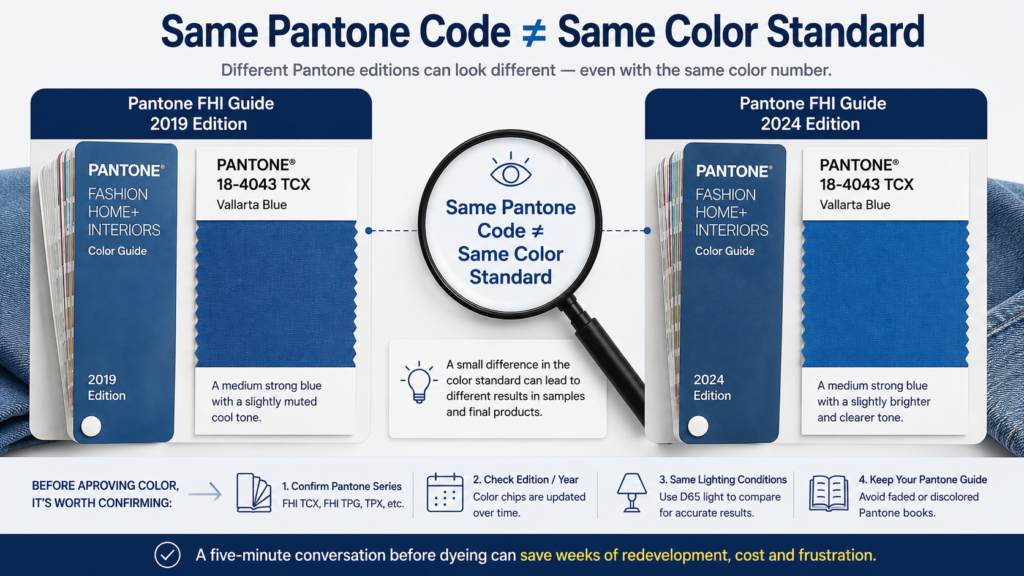
We were using different versions of the Pantone color guide.
Pantone updates its Fashion, Home + Interiors (FHI) color books from time to time. Although many color numbers remain the same, the physical color chips may be slightly adjusted due to improvements in pigments, production methods, or color standard updates.
That means:
✔ The supplier matches one Pantone book.
✔ The customer compares with another edition.
✔ Both sides believe they’re correct—but the colors don’t appear identical.
This small difference can easily result in:
- Extra rounds of lab dips
- Delayed approvals
- Higher development costs
- Misunderstandings between suppliers and brands
Before approving color, it’s worth confirming:
- Which Pantone series is being used (FHI TCX, TPG, etc.)
- The edition or publication year of the color guide
- Whether both parties are comparing under the same lighting conditions
- Whether the Pantone book has faded after years of use
A five-minute conversation before dyeing can save weeks of redevelopment.
In apparel manufacturing, color matching isn’t only about dyeing technology—it’s also about making sure everyone is working from the same standard.