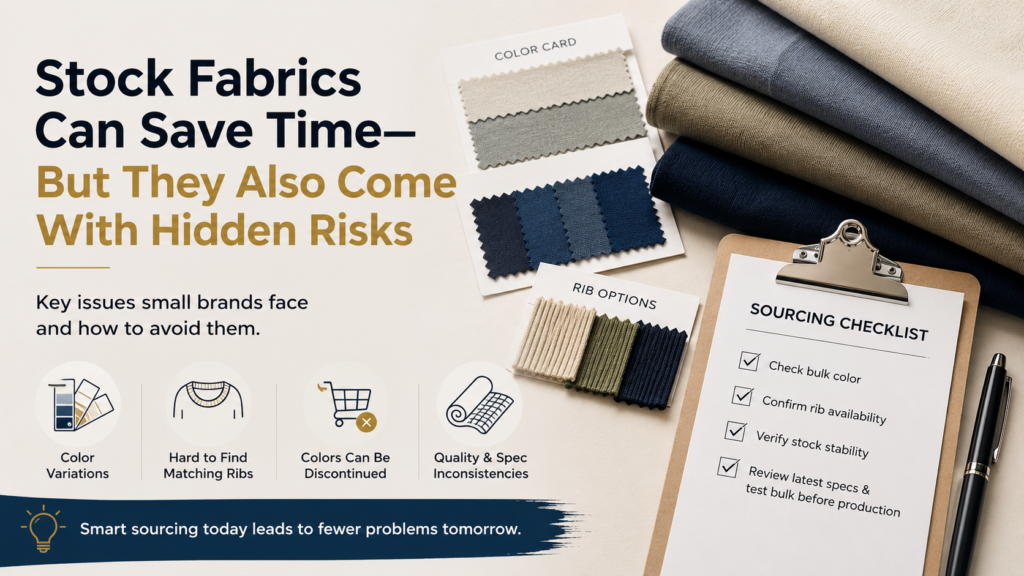
For many emerging fashion brands, stock fabrics are an excellent way to reduce MOQs, speed up development, and launch collections faster.
However, stock fabrics also come with limitations that are often discovered only after production has already begun.
Here are some of the most common issues we encounter.
1. Bulk Fabric May Not Match the Color Card Exactly
The color swatch you receive is usually cut from a previous dye lot.
When new stock arrives, even the same color code can have slight shade differences due to different dye batches.
For fashion products, especially matching sets or repeat orders, this can become a noticeable issue.
How to reduce the risk
• Always approve a bulk fabric cutting before production.
• Don’t rely solely on the original swatch.
2. Matching Rib Colors Are Not Always Available
Many stock fabrics are sold separately from rib trims.
Even if the body fabric is available, finding an exact matching rib can be difficult.
Factories often have to choose the closest available shade, which may still show visible color differences.
How to reduce the risk
• Confirm rib availability before confirming the order.
• If color consistency is critical, consider custom-dyed ribs.
3. Stock Colors Can Be Discontinued Without Notice
Stock fabrics depend on suppliers’ inventory.
A color that is available today may disappear next month, or the supplier may stop producing it altogether.
This becomes a major challenge when brands want to reorder successful products.
How to reduce the risk
• Ask suppliers whether the color is a long-term stock item.
• Reserve sufficient fabric if repeat orders are expected.
4. Fabric Specifications Can Change
Occasionally, suppliers may source yarn from different mills or make small production adjustments.
The fabric may keep the same name, but the hand feel, weight, stretch, or finishing can vary slightly.
For brands focused on consistency, this is worth paying attention to.
How to reduce the risk
• Review the latest fabric specifications before every production.
• Test the current batch instead of assuming it matches previous orders.
Stock Fabric Is Still a Great Choice—If You Understand Its Limitations
Stock fabrics are perfect for sampling, small-batch production, and testing new products.
But they should never be treated as “always identical.”
A good sourcing partner doesn’t just help you find available fabrics.
They help identify potential risks before production starts, so your launch stays on schedule, and your products remain consistent.
Sometimes, avoiding one unexpected color issue can save far more time and cost than finding the cheapest fabric.