
A garment can have premium fabric, accurate measurements, and excellent workmanship — but poor pressing can still affect the customer’s first impression.
When customers receive a garment, they don’t see the production process behind it. They only see the final result.
That is why garment pressing is not just about removing wrinkles. It is a key finishing step that influences the garment’s appearance, shape, and overall quality perception.
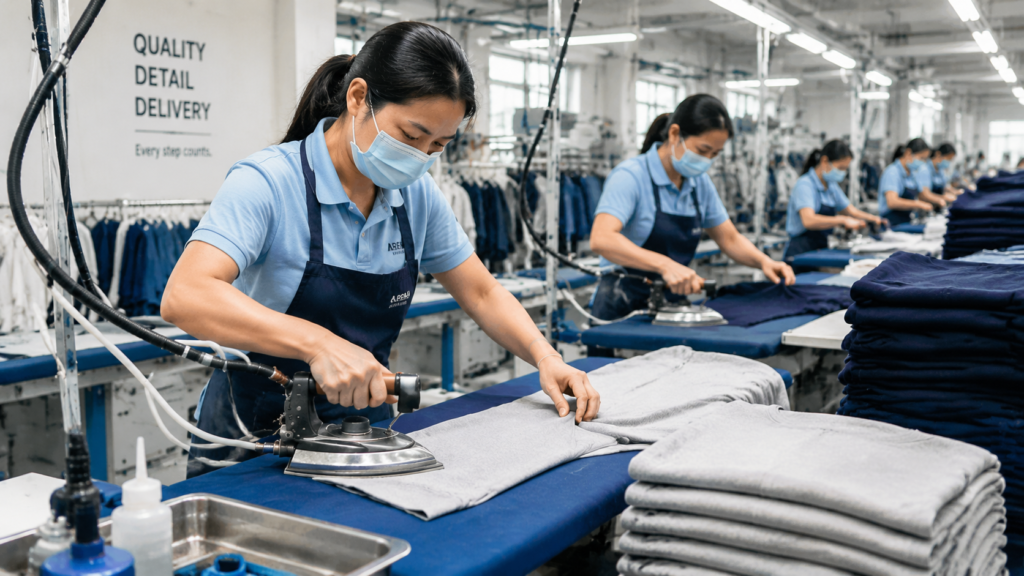
1. Pressing Shapes the First Impression
The first thing customers notice is how a garment looks and feels when they take it out of the package.
Proper pressing helps:
- Maintain a clean and structured silhouette
- Keep collars, cuffs, and hems looking neat
- Remove wrinkles caused during sewing and packing
A garment with twisted seams or poor finishing may give customers the impression of low quality, even if the fabric and stitching are excellent.
2. Different Fabrics Need Different Pressing Methods
Every fabric reacts differently to heat and pressure.
For example:
- Cotton fabrics need proper temperature control to avoid shrinkage or unwanted shine.
- Polyester blends require lower heat to prevent surface damage.
- Wool or wool-blend fabrics need careful steam pressing to maintain their texture.
Incorrect pressing can affect the fabric’s hand feel, appearance, and garment shape.
3. Pressing Influences Brand Experience
For brands, production does not end when sewing is completed.
The customer experience begins when they open the package.
A well-pressed garment shows:
✔ Attention to detail
✔ Professional manufacturing standards
✔ Brand commitment to quality
On the other hand, poor finishing can lead to customer complaints, returns, and negative reviews.
4. Final Pressing Is Part of Quality Control
Before packing, professional manufacturers should check:
✔ Overall garment shape
✔ Collar and cuff appearance
✔ Seam flatness
✔ Wrinkle removal
✔ Final presentation
Because sometimes, the final step determines how customers judge the entire product.
In apparel manufacturing, quality is not only created through fabric selection, cutting, and sewing. It is also perfected during the final finishing stage.
A garment is not truly ready for the market until it looks as good as it was designed to be.