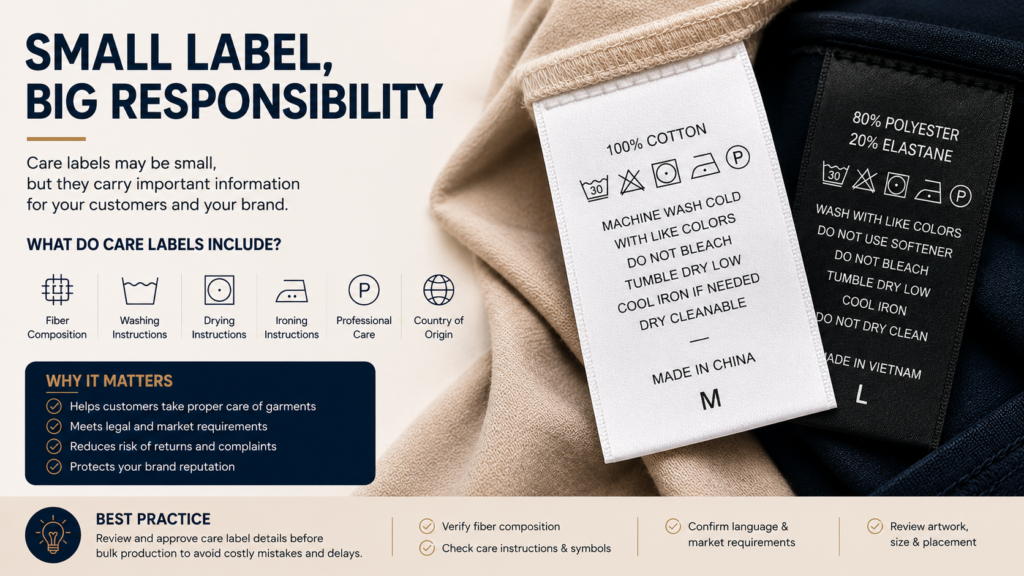
Most people see a care label as just a small tag sewn inside a garment.
For apparel brands, however, it is much more than that.
A care label communicates how a product should be washed, dried, ironed, and maintained. It also provides essential information such as fiber composition and country of origin. In many markets, it is a legal requirement—not just an optional detail.
Yet care labels are often left until the very end of production.
By then, changing a fiber composition, correcting a washing symbol, or updating a translation can mean reprinting thousands of labels, delaying packing, and increasing costs.
Common Mistakes We See
- Fiber compositions that don’t match the actual fabric.
- Incorrect or outdated washing symbols.
- Missing language requirements for different markets.
- Care instructions copied from another product without considering the actual fabric.
These small mistakes can create unnecessary delays and even customer complaints after the products reach the market.
Why Fabric Matters
Different fabrics require different care instructions.
A 100% cotton T-shirt and a wool-blend jacket should never share the same care label. Factors such as shrinkage, colorfastness, fabric construction, and finishing treatments all influence the correct washing recommendations.
This is why care labels should always be verified alongside the final fabric specifications—not copied from previous orders.
Best Practice
Before bulk production begins, make sure to confirm:
✔ Final fiber composition
✔ Washing and drying symbols
✔ Country-specific labeling requirements
✔ Brand logo and artwork
✔ Label size and placement
A few minutes of checking can prevent costly mistakes later.
Sometimes, the smallest label carries the biggest responsibility in the entire garment.
How does your team manage care label approvals?